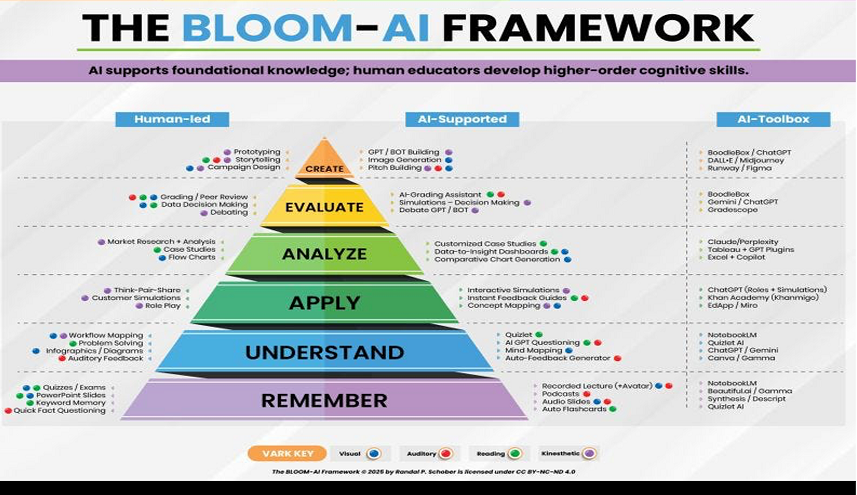
As part of DLCC 2025 (15–16 October 2025), an international Roundtable Debate brought together experts from different countries to discuss the conference theme: “E-learning & Interactive Learning. Generative Artificial Intelligence (GAI), Gamification and Immersive Technologies (AR/VR) in Educational Practice and Research.” With no official minutes available, the following overview reflects the most likely discussion areas and practical takeaways that typically emerge when these three strands (GenAI, gamification, AR/VR) meet in one educational agenda.
A central topic was almost certainly the shift from “AI as a novelty” to AI as a learning infrastructure. In this framing, GenAI is not only a tool for producing text or content, but a support layer for learning design: drafting learning materials, creating variations for differentiation, generating formative quizzes, supporting feedback and tutoring, and helping teachers prototype activities faster. At the same time, the discussion likely emphasised that the educational value depends on pedagogy-first decisions – learning goals, assessment strategy, and clear rules for when and how GenAI is allowed.
A second theme was likely academic integrity and assessment redesign. When GenAI can generate plausible answers, the focus naturally moves toward assessments that are harder to “outsource”: process-based tasks, oral defenses, authentic projects, learning journals, and in-class performance. This also tends to open a debate about fair use policies, transparency (declaring AI assistance), and how to teach learners to verify and cite responsibly. A realistic outcome is a shared view that institutions need clear guidelines and that educators need professional development – not only technical training, but also ethical, legal, and didactic support.
Gamification probably entered the debate as a way to improve motivation and persistence in online learning- especially when paired with analytics and adaptive learning. Experts often highlight that gamification works best when it supports meaningful learning behaviors (practice, reflection, collaboration) rather than superficial point-collecting. The likely “consensus direction” is that gamified elements should be aligned with competencies, include opportunities for cooperation, and avoid designs that unintentionally demotivate weaker learners.
Immersive technologies (AR/VR) were likely discussed in terms of when they add real value: spatial understanding, simulation of dangerous/expensive scenarios, training communication and teamwork, or learning-by-doing in virtual labs. A recurring point in such debates is the need for evidence: not every topic benefits from VR, and adoption depends on cost, accessibility, teacher readiness, and the ability to integrate VR/AR activities into curriculum and assessment – not as isolated demos.
Participants
Moderators: Eugenia Smyrnova-Trybulska, Iwona Mokwa-Tarnowska
Experts: Prof. Piet Kommers (the Netherlands), Prof. Todorka Glushkova (Bulgaria), Prof. Nataliia Morze (Ukraine), Prof. Snježana Babić (Croatia), Prof. Stefan Gubo (Slovakia), Prof. Małgorzata Przybyła-Kasperek (Poland), Prof. Filipe Carrera (Portugal), Dr Miroslav Hruby (Czechia)