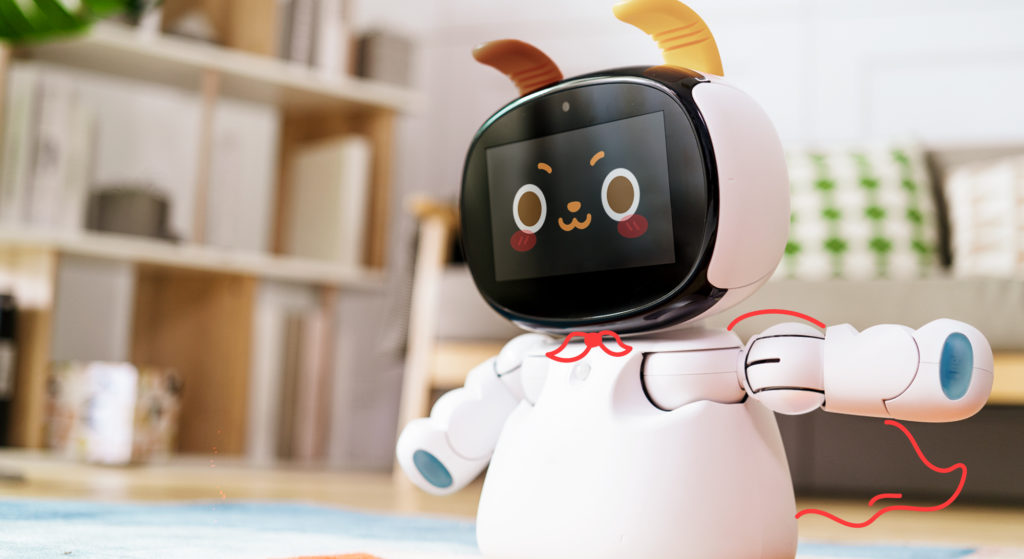
On 13 March 2025, the workshop “Meeting and cooperation with the Kebbi Air robot, FITPED-GAI project – a new educational experience” was held at the Faculty of Arts and Educational Sciences in Cieszyn within the framework of the Open Days.
Although only limited event details are available, the workshop focused on introducing Kebbi Air as a hands-on educational tool and presenting how a social robot can support modern learning experiences connected to AI and generative AI topics.
Kebbi Air is an interactive social robot developed by NUWA Robotics. It is designed for natural communication with users through a combination of expressive “facial” animations on its display, body movements and gestures, and AI-driven interaction.
Why a social robot is a strong tool for teaching AI
Using a robot in education makes abstract AI concepts more concrete. It allows learners to see real examples of how AI systems “sense” the world (voice, vision, touch), how they react to inputs, and where the limitations and biases can appear. In practice, robots also create strong engagement: students tend to ask more questions, test more ideas, and learn by experimenting—exactly the mindset needed for AI literacy.
A few interesting facts about Kebbi Air
Kebbi Air is a tabletop communication robot that can move on wheels and typically includes features such as voice interaction, facial recognition, and touch sensors, which makes it suitable for classroom demonstrations and interactive activities.
For more advanced learning scenarios, NUWA provides developer tools and SDK resources, including example projects, which can be used to build custom apps and activities around the robot.